
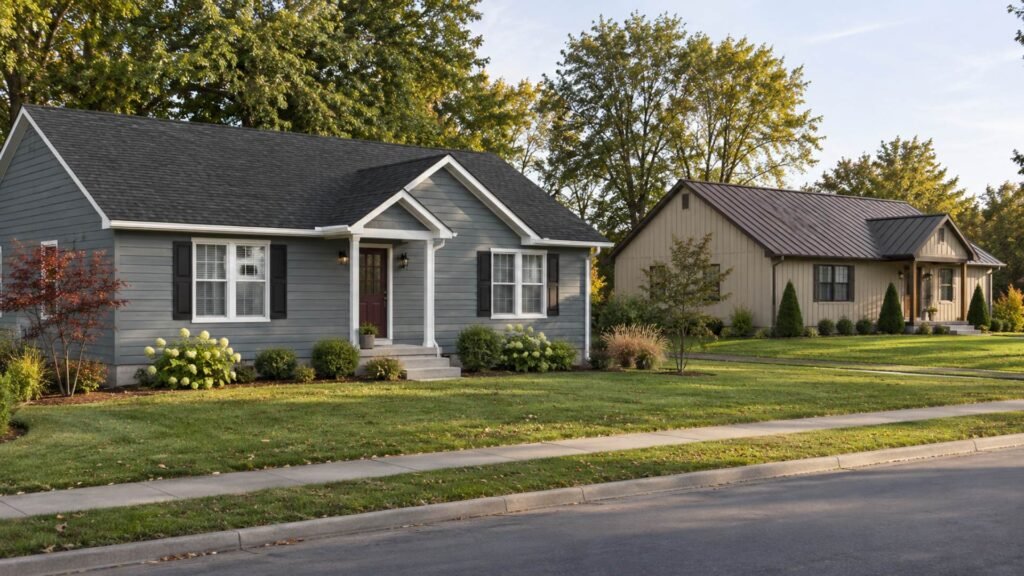
“Metal or shingles?” is a useful starting question, but it leaves out much of what determines a roof’s performance.
An architectural asphalt shingle, an impact-resistant shingle, an exposed-fastener metal panel, and a standing-seam system are different products with different installation details. A practical comparison identifies the exact system before judging its price or suitability.
Key Takeaways
- Compare named products and complete installation scopes.
- Separate appearance, impact performance, maintenance, and warranty terms.
- Consider the roof assembly and local exposure alongside the visible material.
Start With the Product Description
For asphalt, request the manufacturer, product line, supporting components, and installation requirements.
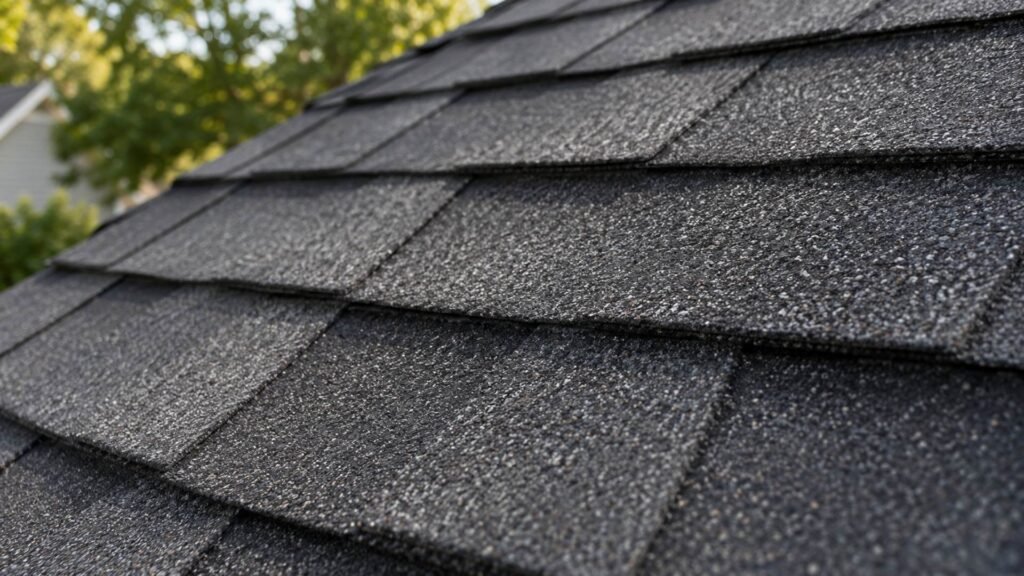
Architectural styling describes a dimensional appearance and construction. It does not automatically establish an impact classification.
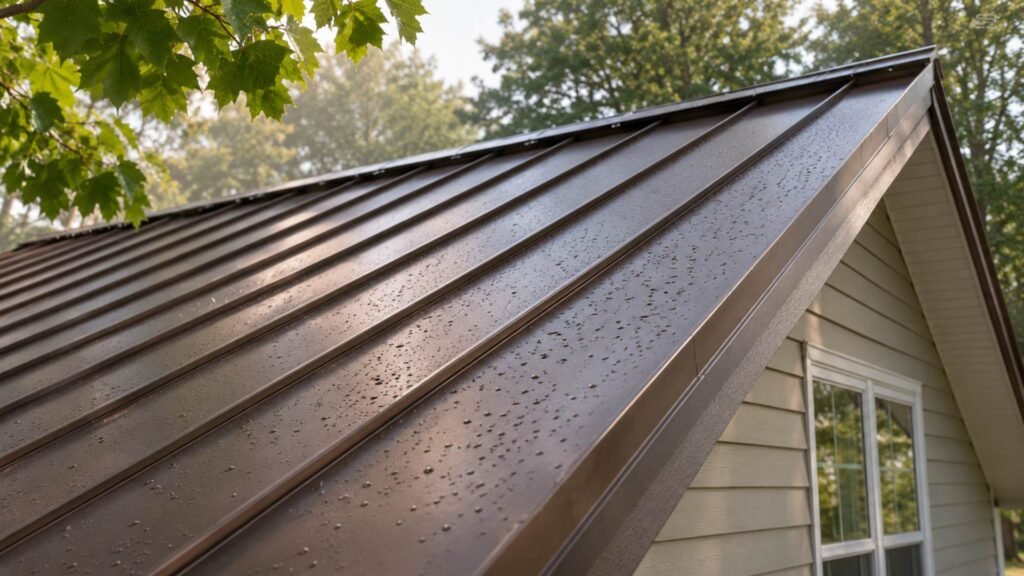
For metal roofing in Omaha, identify whether the proposal uses standing-seam panels, exposed fasteners, metal shingles, or stone-coated steel. Ask about the metal specification, finish, accessories, and attachment system.
Two proposals labeled “metal roofing” may describe very different projects.
Compare the Choices Against Your Priorities
| Priority | Questions about asphalt | Questions about metal |
|---|---|---|
| Appearance | Which shingle pattern and color fit the exterior? | Which panel or shingle profile fits the home? |
| Installed cost | Which product and supporting components are included? | Which attachment system, finish, and accessories are included? |
| Hail performance | What product-specific evidence is available? | How are impacts, finish condition, and performance evaluated? |
| Maintenance | How are local repairs integrated? | Which fasteners, seams, and details need periodic attention? |
| Future repairs | Will matching shingles be available? | Can matching panels and accessories be obtained? |
Write down the priorities that matter to your household before comparing estimates. Appearance, immediate spending, and expected maintenance do not carry the same weight for everyone.
Understand Metal Attachment Methods
The Department of Energy’s Building America Solution Center distinguishes metal-panel and standing-seam systems.
Exposed-fastener panels are secured through the panel surface. Standing-seam systems conceal their attachment beneath the seams. Specific systems vary, so maintenance and installation instructions should come from the selected product’s documentation.
Ask how roof penetrations, valleys, transitions, and edges will be detailed. Also ask how the assembly accommodates movement and which components require inspection over time.
The federal guide includes coastal and high-wind discussion. Those location-specific provisions should not be presented as Omaha requirements.
Evaluate Impact Resistance Separately
No roofing material is hailproof. A classification or test result describes performance under defined conditions.
The IBHS impact-resistance testing protocol evaluates shingle damage modes including dents, tears, and granule loss using laboratory-manufactured hailstones. IBHS describes this as a research and product-comparison tool, not an insurance-claims or warranty standard.
Ask which evidence applies to the exact product being quoted. Avoid assuming that a dimensional appearance or general material category provides the answer.
For asphalt-shingle roofing, product selection and installation requirements deserve separate review. The same principle applies to metal systems.
Look Beyond a Summer Energy Claim
Roof reflectance and thermal emittance affect how a surface responds to sunlight. They are properties of a product and finish, not a guarantee attached to the words “metal” or “asphalt.”
Lawrence Berkeley National Laboratory’s cool-roof explanation describes the balance between solar reflectance, heat emission, summer cooling, and winter heating effects.
For an Omaha home, ask how the proposed roofing works with insulation, air sealing, ventilation, and the existing assembly. Avoid budgeting for a promised utility-bill reduction without a property-specific basis.
Compare Complete Installed Projects
Request estimates using the same measured roof area and clearly stated removal requirements.
The scope should identify decking allowances, underlayment, flashing, ventilation, permits, disposal, cleanup, and property protection. Low-slope porch or addition sections may need a different covering and separate transition details.
A broader residential roofing scope should distinguish those areas instead of treating every surface as one interchangeable installation.
Keep material-only prices separate from complete project costs. Avoid comparing an installed asphalt estimate with a metal-panel price that excludes removal, accessories, or labor.
Plan for Maintenance and Repairs
Ask for the maintenance instructions before choosing a product.
Find out what needs routine observation, who can perform repairs, and how replacement components are obtained. Review how work by other trades, such as adding a roof penetration later, should be handled.
Retain the product names, finish information, installation records, and warranty documents. Those details can be useful when a future repair requires matching materials.
Read the Warranty Categories
Review material, finish, applicable system, and workmanship coverage separately.
Ask what event triggers coverage, which exclusions apply, who handles a concern, and whether registration or maintenance is required. A long stated duration does not by itself explain the protection available for a leak.
If someone suggests an insurance benefit, verify it with your carrier before including it in the financial comparison.
Frequently Asked Questions
Are architectural shingles automatically impact resistant?
No. Architectural construction and impact performance describe different characteristics. Check documentation for the specific product.
Is all metal roofing standing seam?
No. Metal roofing includes several panel and shingle systems, including exposed-fastener and stone-coated products.
Does either material guarantee protection from hail?
No. Product performance, installation, existing condition, and storm characteristics affect the outcome.
Can one roofing material guarantee lower energy bills?
No. Energy performance depends on the product, climate, insulation, air sealing, and the building’s overall assembly.
What makes estimates comparable?
They should describe the same measured area and equivalent removal, supporting components, allowances, labor, and exclusions.
How should I compare metal roofs and asphalt shingles per square foot?
Compare complete installation costs per square foot using the same measured roof area. Include labor costs, tear-off, underlayment, flashing, and decking allowances. Material-only prices do not represent the complete roof replacement cost.
Why can metal roofs have a higher upfront cost than an asphalt roof?
Metal roofing materials, custom details, and installation requirements can increase material and labor costs. Roof pitch, roof size, and complexity also affect pricing, particularly for a standing seam metal roof. Building America Solution Center
Do metal roofs require less maintenance than an asphalt shingle roof?
Not always. Metal roofs require checks of seams, flashing, and penetrations. Exposed fastener panels also need fastener inspections, while an asphalt shingle roof needs checks for damaged shingles. Maintenance depends on the roofing system and exposure.
How do metal roofs and asphalt shingles affect energy efficiency?
Reflective finishes can help metal roofs absorb less solar heat. Reflective asphalt shingles can also improve energy efficiency. Actual performance depends on the product, insulation, ventilation, and the balance between summer cooling and winter heating needs. Heat Island Group
Can metal shingles resemble slate or wood shake?
Yes. Metal shingles come in profiles resembling slate or wood shake, offering alternatives to traditional vertical metal panels. Compare actual product samples, colors, and finishes when evaluating how a new roof will affect curb appeal. Metal Roofing Alliance
Are metal roofs made from recycled materials?
Metal roofs can contain recycled materials, but recycled content varies by metal and manufacturer. Request product-specific documentation and check local recycling options when comparing the environmental characteristics of different roofing materials. metalconstruction.org
Do metal roofs need snow guards in colder climates?
Snow guards may be appropriate where sliding snow could endanger entrances or walkways. Their need, placement, and attachment depend on roof pitch, snow loads, and the specific roofing system. A qualified professional should assess the design. metalconstruction.org
Do metal roofs automatically qualify for an insurance discount?
No. Eligibility depends on the insurance company, location, and documented product characteristics. Confirm whether the proposed roof replacement qualifies and what documentation is required before including an insurance discount in your budget. content.naic.org
Choose a Defined System
A useful roofing comparison connects a specific product to the home, installation scope, and maintenance plan. The better fit is the system whose documented characteristics and complete cost align with the property’s needs and the homeowner’s priorities.