
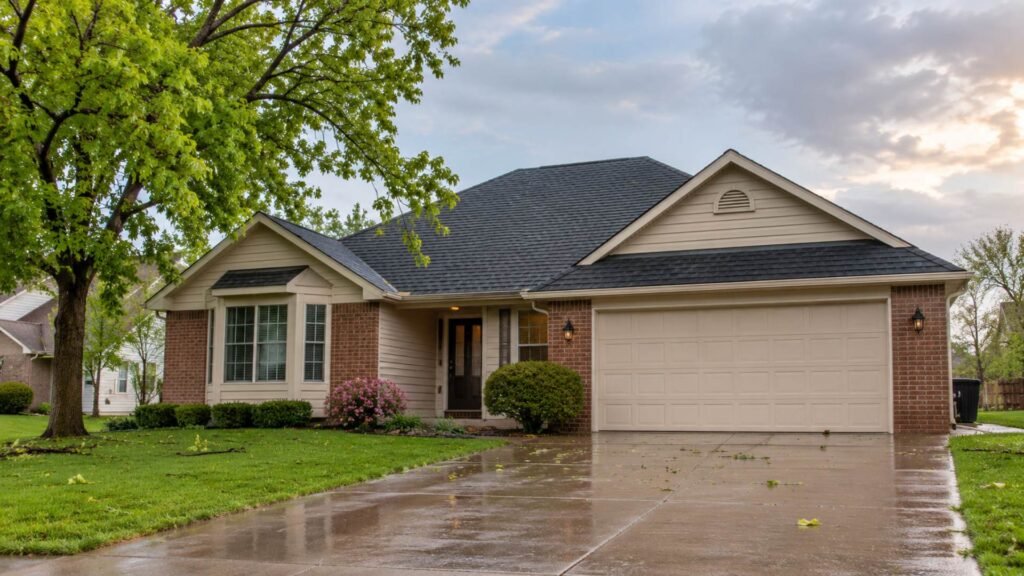
When a storm has passed, it can be difficult to tell what needs attention first. A roof may look unchanged from the street even when gutters or other exterior materials show impacts.
Start by staying safe, recording what you can observe, and communicating promptly when damage is suspected. You do not need to diagnose the entire roof before reporting a possible loss.
Key Takeaways
- Observe from a safe ground-level location and document changes.
- Notify your insurer promptly when damage is suspected.
- Separate temporary protection, roofing assessment, and coverage decisions.
Check for Immediate Hazards
Wait until conditions are safe before going outside. Keep away from downed lines, unstable trees, damaged structures, and areas with visible movement or sagging.
If water is entering near electrical equipment or a ceiling appears unstable, keep the area clear and obtain appropriate emergency assistance.
Avoid climbing onto wet or storm-affected roofing. Roof access and temporary coverings require equipment and judgment suited to the conditions.
A ground-level check is an initial record of what you see. It does not establish whether a roof needs repair or replacement.
Photograph Observable Changes
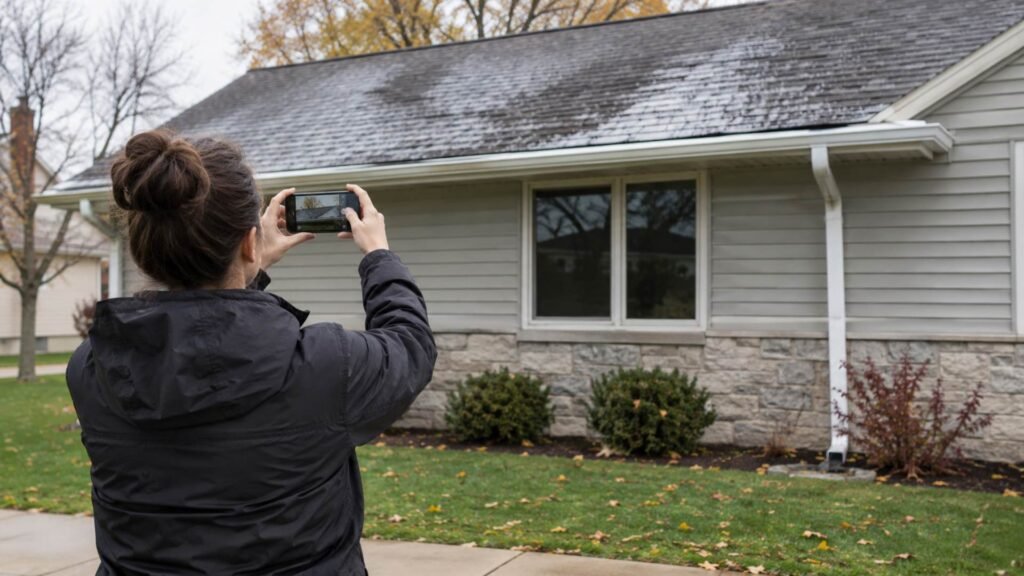
Take wide photographs that identify the area, followed by closer photographs where safely accessible.
Record shingles or debris on the ground, visible changes to gutters or siding, and any interior staining or water entry. Note when you first observed each condition.
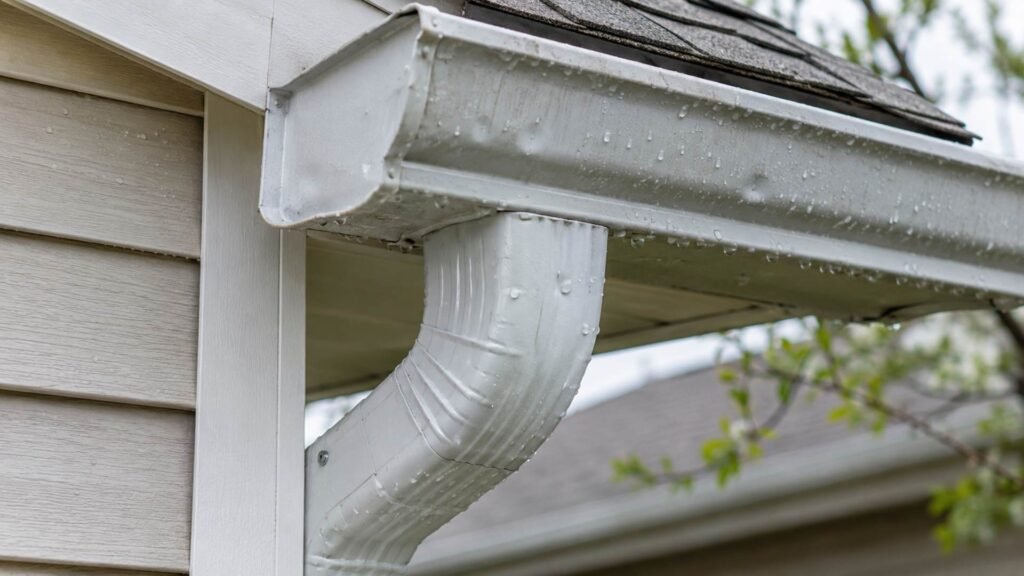
A mark on a gutter and a failure in a roof covering are separate observations. An evaluation of hail damage to roofing should assess the actual materials rather than infer the entire roof’s condition from one exterior component.
Retain original photographs. Earlier inspection images can also help establish what was present before the storm.
Notify the Insurer Without Waiting for a Complete Diagnosis
Nebraska’s after-storm claims guidance recommends reporting damage as soon as possible, keeping communication records, documenting losses, and retaining receipts for temporary repairs.
Explain what you observed and ask what documentation the insurer needs. Record the claim number, representative’s name, and next steps.
You can arrange a roofing assessment while following the insurer’s reporting requirements. Waiting for every photograph or estimate may create unnecessary delay.
Ask about applicable deadlines rather than assuming a universal reporting period.
Arrange Appropriate Temporary Protection
Temporary work may be necessary to limit additional damage while the property is assessed.
Ask the professional performing the work to record the affected area, the protective measures, and any limitations. Retain invoices and photographs.
Nebraska’s guidance distinguishes temporary protection from permanent repairs and advises coordinating permanent work with the adjuster’s inspection. Discuss any urgent work directly with the insurer.
A temporary covering should not be confused with confirmation that full replacement is needed. Its purpose, expected limitations, and follow-up should be clear.
Obtain Findings About the Roof Itself
A roofing assessment should identify the areas examined, the observed damage, and the basis for the recommended work.
Useful documentation includes photographs tied to identifiable locations, descriptions of affected components, and access limitations.
The scope of storm damage roof repairs in Omaha can vary with the covering, flashing, penetrations, and underlying conditions. Request an explanation of why the proposed repair boundary is appropriate.
If a cause is uncertain, that uncertainty should remain in the report. A contractor should distinguish aging, prior repairs, installation concerns, and storm-related observations.
Keep Roofing Estimates and Insurance Adjusting Distinct
The roofer’s construction estimate describes materials, labor, and the proposed work. The insurer evaluates coverage under the policy.
Nebraska’s explanation of adjuster roles distinguishes company, independent, and public adjusters. Public adjusting is a separately regulated role requiring a Nebraska license.
Do not assume that a roofing contractor’s assistance means the contractor is acting as your licensed public adjuster.
Ask your insurer about deductibles, depreciation, exclusions, and payment arrangements. A completed roofing assessment does not guarantee a particular settlement.
Review the Contract Before Permanent Work
An urgent repair decision still deserves a clear written scope.
The FTC’s post-disaster contractor guidance highlights pressure to sign immediately, demands for full upfront payment, and blank contracts as warning signs.
Verify registration, insurance, and applicable local requirements. Review payment terms, exclusions, and written change-order procedures.
If repair or replacement recommendations differ, compare the findings and work proposed. Avoid treating a nearby property’s insurance outcome as evidence of what your policy will cover.
Keep a Record That Can Be Updated
Use one folder for photographs, weather notes, inspection findings, estimates, receipts, and insurer communication.
After a roof inspection, list unresolved questions and who is addressing them. This makes it easier to track follow-up without losing the distinction between observations, recommendations, and coverage decisions.
For a Council Bluffs property, use Iowa-specific insurance and contractor information. Nebraska requirements should not be assumed to apply across the state line.
Frequently Asked Questions
Should I wait for a roofer before notifying insurance?
Not if you suspect damage and your policy calls for prompt reporting. Notify the insurer and ask how to coordinate the roofing assessment.
Do dented gutters prove the roof needs replacement?
No. They are observations worth documenting, but the roof covering and other components need their own evaluation.
What if there is no visible leak?
The absence of a leak does not establish the condition of the roof. An inspection can assess suspected damage and document the findings.
Can a contractor promise claim approval?
No. The insurer determines coverage under the policy. A construction estimate does not guarantee a claim outcome.
Should permanent repairs start before the adjuster visits?
Coordinate with the insurer first. Necessary temporary protection and permanent repairs involve different steps and documentation.
What are common signs of roof storm damage after a major storm?
Missing shingles, damaged flashing, interior leaks, and unusual granule loss can indicate roof problems. Granule loss alone does not confirm hail damage. A professional inspection helps distinguish storm damage from existing wear.
Can high winds cause roof damage without missing shingles?
Yes. High winds can loosen shingles or damage flashing without removing them completely. These weaknesses can reduce the roof’s ability to shed wind-driven rain, allowing heavy rain to cause water leaks beneath the roofing materials.
When does an active leak require emergency roof repair?
Emergency roof repair may be needed when water enters rapidly or the roof deck is exposed. Stay clear of water near light fixtures and downed power lines. Electrical hazards require appropriate emergency assistance. weather.gov
How long can emergency tarping protect a damaged roof?
Emergency tarping is a temporary measure, and its effectiveness depends on installation, weather, and the damage involved. A professional roofing contractor should explain its limitations and the plan for permanent repairs before the next storm.
What hidden storm damage can a professional inspection uncover?
A professional inspection may identify roof deck damage, wet insulation, interior leaks, or structural concerns in accessible areas. Some hidden damage requires additional investigation or becomes visible only after roofing materials are removed.
How do actual cash value and replacement cost value affect insurance claims?
Actual cash value accounts for depreciation. Replacement cost value covers repair or replacement using similar materials without deducting depreciation, subject to policy terms, deductibles, and limits. Ask your insurance company which coverage applies to your roof. content.naic.org
What affects roof repair costs after high winds or heavy rain?
Repair costs depend on access, roofing materials, and the extent of storm damage. Replacing isolated asphalt shingles involves a different scope from repairing the roof deck or undertaking roof replacement. Estimates should separate temporary repairs from permanent repairs.
How can homeowners avoid storm chasers after severe storms?
Verify the roofing contractor’s insurance, applicable credentials, references, and business details. Obtain a written estimate, avoid pressure to sign immediately, and discuss insurance claims with your insurance company before authorizing permanent repairs.
A Clear Sequence After a Storm
Safe observations, prompt reporting, appropriate temporary protection, and documented findings create a useful sequence. Keep the roofing scope and coverage decision distinct so that each next step rests on information relevant to your property.