
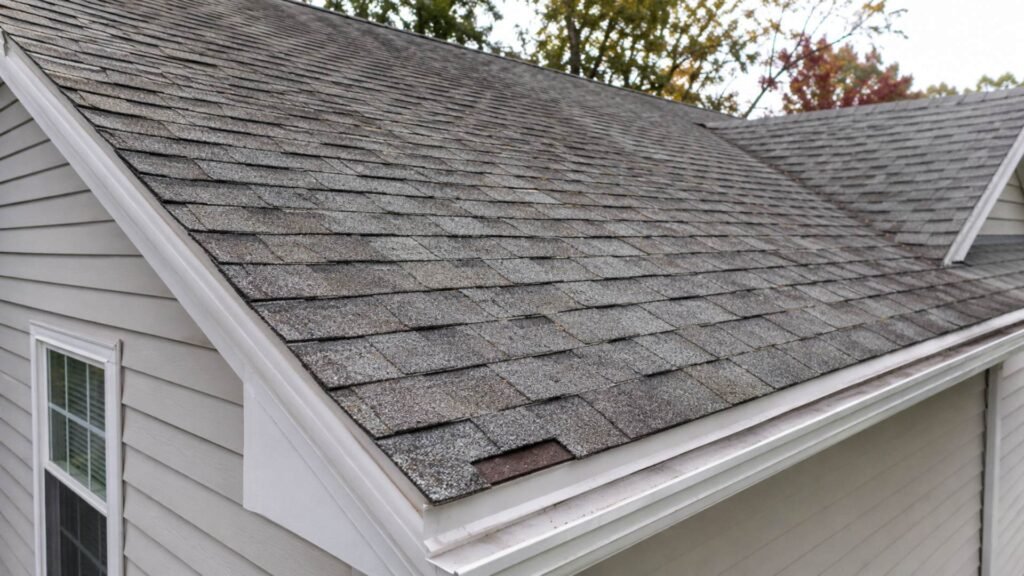
A missing shingle and a persistent ceiling stain can lead to the same question: how much roofing work is actually necessary?
The useful answer begins with the failure being investigated. Is there a limited damaged area, a problem at a penetration, or deterioration across much of the roof? Each finding leads to a different discussion about repair and replacement.
Key Takeaways
- Assess the damaged area and the condition of the remaining roof.
- Consider age alongside repairability, leak history, and observed deterioration.
- Compare what each proposed project resolves and what remains afterward.
When a Repair May Be Practical
A repair may be appropriate when damage is limited and the surrounding materials can remain in service.
The Asphalt Roofing Manufacturers Association’s repairability guidance discusses repairing asphalt-shingle roofing. The practical question is whether a particular roof can be repaired successfully under its actual conditions.
Ask the contractor to identify the affected materials, explain how adjacent roofing will be handled, and describe the connection between the repair and the remaining system.
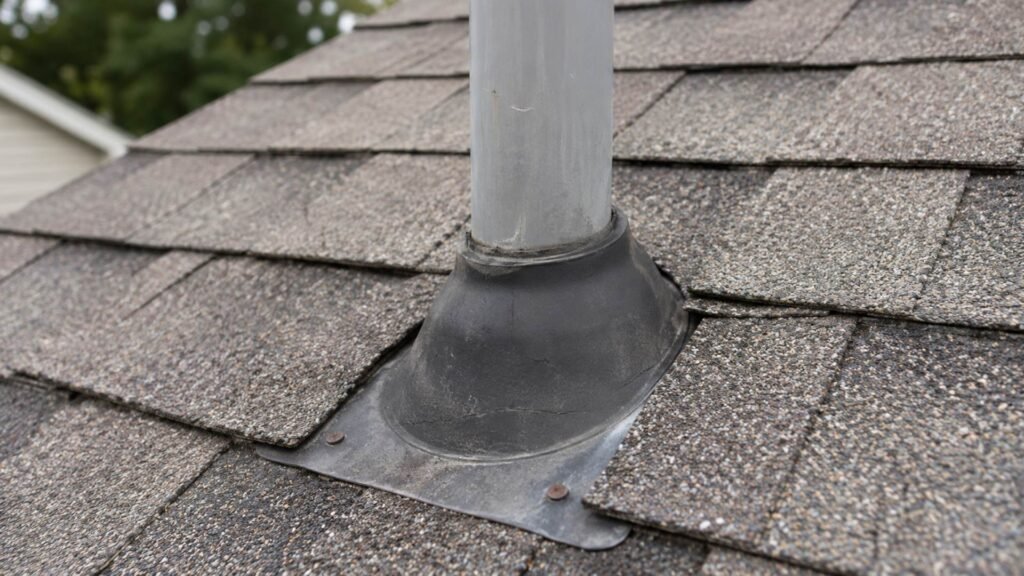
For roof repairs in Omaha, a written scope should make the repair boundary clear. “Fix the leak” provides much less information than identifying the affected flashing, shingles, or pipe boot.
When Replacement Needs Evaluation
A larger project deserves consideration when problems extend beyond a repairable area or when the remaining roof is significantly deteriorated.
Repeated repairs also deserve context. Several unrelated isolated repairs are different from recurring water entry at a location that has never been properly diagnosed.
Ask why replacement is recommended and whether a smaller scope was considered. Photographs should connect the recommendation to identifiable findings.
Avoid treating a universal damage percentage or repair-cost percentage as the deciding rule. The remaining roof’s condition and the ability to integrate new materials still matter.
Compare the Options Against the Findings
| Finding | Question about repair | Question about replacement |
|---|---|---|
| Limited damaged area | Can it be repaired without harming surrounding roofing? | What makes a larger project necessary? |
| Recurring leak | Has the entry point been established? | Will the proposed scope address that cause? |
| Widespread deterioration | How much serviceable roofing would remain? | Which supporting components need replacement? |
| Decking concerns | Is the affected area accessible and limited? | How will concealed damage be priced? |
| Mixed roof sections | Can transitions be integrated properly? | Does the proposal include every roof area? |
This keeps the discussion focused on the property rather than a general preference for one type of project.
Use Age as Background Information
Locate installation invoices, permit records, warranty documents, or earlier inspection reports where available.
A service-life estimate is not a direct measurement of present condition. Exposure, materials, installation, maintenance, and previous damage all affect what an inspector finds.
The American Society of Home Inspectors’ homebuyer’s guide to roofs describes the role of roof assessment in understanding condition and likely concerns. Use that approach to connect age with observed evidence.
If records are incomplete, ask how confidently the roof’s age can be estimated and which findings support the recommendation.
Investigate Recurring Water Entry
Explain when moisture appears. Rain direction, prolonged rainfall, snowmelt, and previous repairs can provide useful clues.
A stain inside does not by itself identify the failed component. The contractor should explain the suspected entry point, the investigation performed, and any remaining uncertainty.
Winter water entry may also involve heat loss and ice dams. University of Minnesota Extension’s explanation of ice-dam formation describes how heat escaping from a house can contribute to melting and refreezing.
That building-science explanation is relevant to cold-weather investigation. Minnesota’s legal requirements should not be applied to an Omaha property.
If attic air leakage, insulation, or ventilation is involved, clarify which work is included and whether a separate assessment is needed.
Clarify “Reroof,” Overlay, and Partial Replacement
Ask contractors to define their terminology.
Some people use “reroof” to mean any replacement work. Others use it to describe installing a new covering over an existing one. The written proposal should state whether removal is included.
An overlay requires assessment of the existing assembly and applicable local and manufacturer requirements. It should not be treated as a default solution.
A partial replacement also needs a defined boundary. Ask how new materials will connect to existing roofing and whether matching products are available.
Compare the Next Several Decisions
Request separate scopes when repair and replacement are both reasonable possibilities.
For the repair option, identify known concerns that will remain and any anticipated follow-up work. For complete roof replacement, clarify removal, decking allowances, flashing, ventilation, cleanup, and warranties.
Your expected ownership period is useful context, but the proposed work still needs to address the documented condition.

Keep the inspection findings and estimates together. A roof inspection provides the starting information; the estimates explain how different projects respond to it.
Frequently Asked Questions
Does one leak mean the whole roof needs replacement?
No. The cause and extent of the problem need investigation. Some leaks involve a limited component or area.
Can a roof be too deteriorated for a local repair?
Yes. The surrounding materials may prevent a sound repair or require a larger scope. Ask what specific findings establish that limitation.
Can only one roof section be replaced?
Sometimes. Material availability, existing condition, transitions, and applicable installation requirements determine whether that approach is practical.
Does roof age decide the answer?
Age adds context, but observed condition, repairability, and damage extent are also important.
What should a repair estimate explain?
It should identify the affected area, the work and materials, exclusions, warranty terms, and any known concerns left unresolved.
Can I switch from asphalt shingles to metal roofing during roof replacement?
Metal roofing may be an option when replacing asphalt shingles. Before metal roof installation, a roofing contractor should assess the existing roofing system, roof decking, slope, and installation requirements.
Does storm damage always require replacing the entire roof?
No. Isolated wind damage or damaged shingles may only need roof repair. Widespread storm damage may justify roof replacement, depending on the roofing materials and remaining condition. A roof inspection helps establish the appropriate scope.
How should I compare roof repair and roof replacement estimates?
Compare the project scope, roofing materials, labor, decking allowances, flashing, gutters, and warranties. A written estimate should explain what each option addresses, what remains unresolved, and how additional work will be priced.
Can a roofing contractor document storm damage for insurance claims?
Yes. A roofing contractor can inspect the damaged roof, document damage, and prepare a construction estimate. The insurer’s adjuster assesses the loss, while coverage and payment depend on your homeowners insurance policy.
What should a roofing company assess during a free inspection in Omaha, NE?
A free inspection should assess accessible roofing materials, flashing, gutters, and signs of storm damage. Homeowners should confirm whether the roofing company provides photographs and free estimates explaining whether roof repair or roof replacement is appropriate.
What records should homeowners keep for roofing insurance claims?
For roofing insurance claims, keep photographs, roof inspection findings, written estimates, temporary repair receipts, and insurer correspondence. These records help homeowners compare roof repair and roof replacement recommendations during the claims process.
Can insurance claims include storm damage to gutters and siding?
Insurance claims may include gutters, siding, and roofing when a covered event damages those components. Homeowners should confirm coverage with their insurer and keep roof replacement, gutter work, and siding repairs itemized separately.
Can a new roof improve curb appeal and energy efficiency?
A new roof with architectural shingles or metal roofing can change a home’s appearance. Architectural shingles provide a dimensional look, while energy efficiency depends on the selected product, insulation, air sealing, and overall roofing system.
How can homeowners compare roofing services in Omaha and surrounding communities?
Homeowners in West Omaha, La Vista, and Council Bluffs should compare each roofing company’s relevant experience, insurance, references, and written estimates. Confirm what a free inspection includes and how the roofing services address the existing roofing system.
Match the Work to the Condition
The strongest decision explains why a proposed scope fits the findings. A useful comparison shows what repair can accomplish, what replacement would change, and which underlying problems need attention either way.